

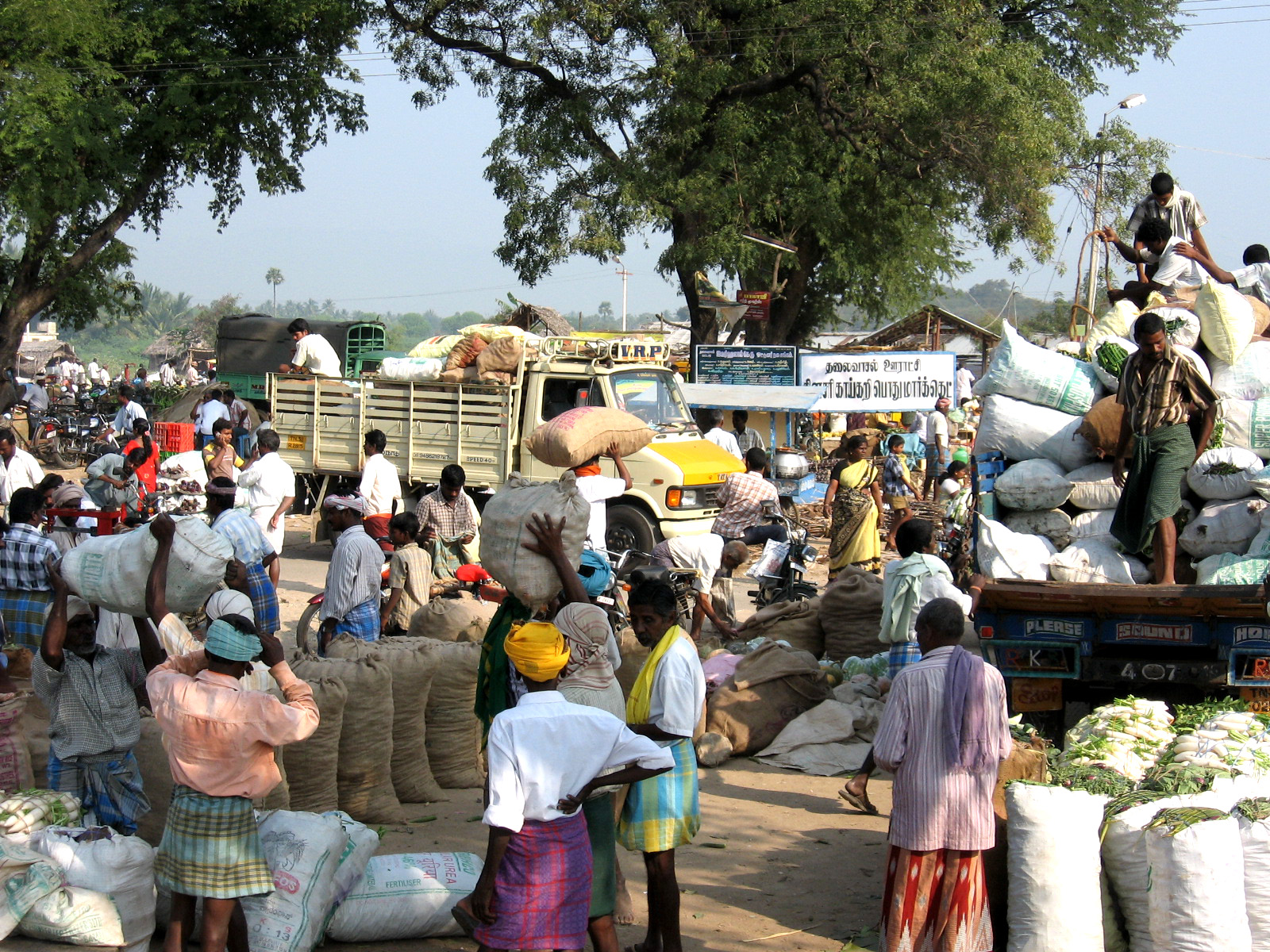
Market India (Wikimedia Commons)
ISLAMABAD: A new report by Azim Premji University reveals a worsening employment crisis among India’s youth, with unemployment rates approaching 40% among those aged 15-25 and around 20% for those aged 25-29, despite decades of rising educational enrollment.
The State of Working India 2026 report highlights a growing disconnect between education and job creation in one of the world’s youngest economies.
India’s youth population (15-29 years) stands at 367 million, roughly one-third of the working-age population.
Of these, 263 million are currently out of education, representing a vast potential workforce. However, with the country’s median age at 28, the report warns that India’s demographic advantage could begin to fade after 2030 if job creation does not accelerate.
The transition from education to employment remains particularly challenging. In 2023, 11 million out of 63 million graduates aged 20-29 were unemployed.
While about half of young male graduates manage to find work within a year, only 7% secure stable, salaried positions. Notably, graduate unemployment has remained persistently high between 35% and 40% since 1983.
This comes even as access to education has expanded significantly. Tertiary enrolment has reached 28%, comparable to countries with similar income levels.
Female enrolment rose sharply from 38% in 1983 to 68% in 2023, while male enrolment increased from 49% to 73%. Gains were also recorded among historically disadvantaged communities, though their participation still lags behind the national average.
However, the report flags a worrying reversal among young men, with enrolment dropping from 38% in 2017 to 34% in 2024. Financial pressures appear to be a major factor, with 72% of those leaving education citing the need to support household incomes.
The rapid expansion of private institutions has driven much of the growth in education.
The number of higher education institutions surged from 1,644 to over 69,000 since liberalization. Yet this expansion has raised concerns about quality, with significant teacher shortages reported far exceeding recommended student-teacher ratios.
A similar trend is evident in vocational training. Industrial Training Institutes have nearly quadrupled since 2005, with private providers dominating the sector. However, many of these institutions struggle with quality issues and weak links to industry employment.
Cost remains another major barrier. Professional degrees are increasingly out of reach for poorer households, with medical education costing nearly ₹97,400 annually and engineering degrees costing an average of ₹2.3 million. These expenses often exceed household incomes, reinforcing inequality in access to high-paying jobs.
Despite these challenges, graduates continue to enjoy a wage advantage, earning roughly twice as much as non-graduates at the entry level. However, entry-level salaries for young male graduates have stagnated since 2011. Encouragingly, the gender pay gap among graduates has narrowed, with young women now earning on par with men.
The report also notes shifts in employment patterns. Young workers are moving out of agriculture, though women’s participation in the sector has risen since 2017. Meanwhile, young women are increasingly entering modern sectors such as IT, manufacturing, and business services. For young men, employment remains concentrated in trade, transport, and construction.
Migration continues to play a critical role in balancing labour markets, with youth making up around 40% of informal migrant workers. States like Bihar and Uttar Pradesh are major sources of migrant labour, while Delhi, Haryana, and Punjab are key destinations.
Commenting on the findings, university president Indu Prasad said that while more young Indians are educated and ambitious than ever before, the challenge now lies in ensuring meaningful employment opportunities.
Lead author Rosa Abraham added that improving the transition from education to work will be crucial for India’s economic future.


Latest News
Pakistan launches 5G services
2 HOURS AGO

Pakistan, Turkiye discuss regional developments, reaffirm close coordination
3 HOURS AGO
Nearly 40% of Indian graduates under the age of 25 are unemployed
5 HOURS AGO
Facts belie Tulsi Gabbard’s claim about Pakistan’s missiles
AN HOUR AGO
.jpg)
Islamic countries including Pakistan condemn Iranian targeting of civilian infrastructure
7 HOURS AGO