Russia banned, Israel stays: Spotlight on Eurovision as 5 nations walk out over Gaza

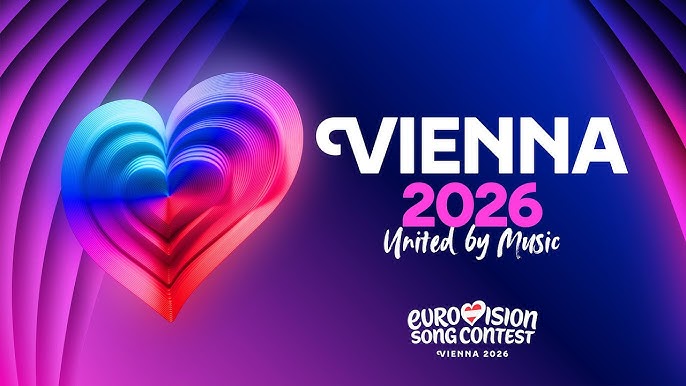
(Screengrab via YouTube/Eurovision Song Contest)
ISLAMABAD: Europe's biggest cultural event is in the spotlight. Five countries have pulled out of the Eurovision Song Contest 2026 over a question the organizers can't answer: Why was Russia banned for invading Ukraine, but Israel is still in despite UN findings of genocide in Gaza?
The European Broadcasting Union's response to Russia's invasion was immediate. The organization announced in February 2022 that "no Russian act will participate" in that year's contest, according to its official statement.
The executive board's decision cited concern that Russian inclusion "would bring the competition into disrepute" given the "unprecedented crisis in Ukraine."
Fast forward to 2025, and the contrast is stark. Despite the UN Independent International Commission of Inquiry concluding in its June 2025 report that Israel has committed genocide in Gaza, Israel's broadcaster KAN competed in 2025 -- and is confirmed for 2026, according to EBU records.
The International Court of Justice ruled in January 2024 that it was "plausible" that Israel's actions violate the Genocide Convention.
UN Special Rapporteur Francesca Albanese concluded in her October 2025 report "Gaza Genocide: a collective crime" that there were "reasonable grounds to believe that the threshold indicating the commission of the following acts of genocide against Palestinians in Gaza has been met."
The walkout
Five national broadcasters have withdrawn from Eurovision 2026 -- to be held in Vienna in May -- an unprecedented move in the contest's seven-decade history.
Ireland's RTE said it would not participate if Israel competed, calling it "unconscionable given the appalling loss of lives in Gaza and the humanitarian crisis," according to its official statement.
The Netherlands' AVROTROS announced its withdrawal, with Managing Director Taco Zimmerman stating: "Culture connects, but not at all costs. Universal values such as humanity and the free press have been seriously violated and are not negotiable for us."
Slovenia's RTVSLO declared that its participation would be "incompatible with the values" of peace and equality, with board President Natalija Gorscak stating: "Slovenia will not be there. Also on behalf of the [20,000] children who died in Gaza."
The state broadcaster stated that the contest had become "hostage to the political interests of the Israeli government.”
Spain and Iceland also withdrew, citing similar concerns about double standards and the impossibility of maintaining Eurovision as a neutral cultural event.
The sponsorship question
The broadcasters' concerns about political interference extend beyond participation policy. Since 2020, cosmetics company Moroccanoil has served as a "Presenting Partner" and official sponsor of Eurovision, providing professional hairstylists for artists during the contest.
According to the company's own terms and conditions on its official website, Moroccanoil is "owned and operated by Moroccanoil Israel, Ltd or its affiliates or subsidiaries."
A CNN investigation cited by Moroccan news outlet Hespress English reported that Moroccanoil manufactures 80% of its products at a facility in Israel, producing 150,000 bottles daily at a plant "two hours north of Jerusalem."
The sponsorship arrangement continued through 2025 and into 2026, even as withdrawing broadcasters criticized Israel's use of the contest for political purposes.
Conversely, no comparable major sponsorship from Russian companies existed during Russia's participation, according to available EBU partnership records.
'Unprecedentedly complex'
At its general assembly, the EBU acknowledged that the contest "is not immune to the pressures of global politics," according to its official statement.
The organization expressed support for KAN's independence, noting the "pressure it is repeatedly experiencing from the Israeli government," and announced plans to engage in dialogue with member broadcasters.
But no such process was initiated for Russia; neither was any support expressed for the Russian public broadcaster's concerns about government pressure.
What Eurovision says it stands for
The contest's reach is broad. It reached 166 million viewers in 2025, achieving a 48% share of viewing, according to EBU data. Eurovision's website states: "The Eurovision Song Contest's values are of universality and inclusivity and our proud tradition of celebrating diversity through music."
When Russia was excluded, the EBU stated it was "dedicated to protecting the values of a cultural competition which promotes international exchange and understanding, brings audiences together, celebrates diversity through music and unites Europe on one stage."
The withdrawing broadcasters invoked those same values, arguing that permitting Israel's participation while Gaza faces what UN experts characterize as genocidal conditions violates the principles the EBU cited when excluding Russia.
The question now facing Eurovision is whether its stated values are universal or applied selectively?
Latest News
Pakistan's PM to begin three-nation visit to Saudi Arabia, Qatar and Turkiye
2 HOURS AGO
Pakistan won't quit US-Iran mediation, says finance minister
3 HOURS AGO
Russia can 'compensate' for China's resource gap from Iran war
3 HOURS AGO
Israel, Lebanon agree to direct negotiations after 'productive' talks: US
3 HOURS AGO
Saudi Arabia commits $3B in additional deposits for Pakistan: FM Aurangzeb
3 HOURS AGO