PM, president call for greater inclusion as Pakistan marks Autism Awareness Day

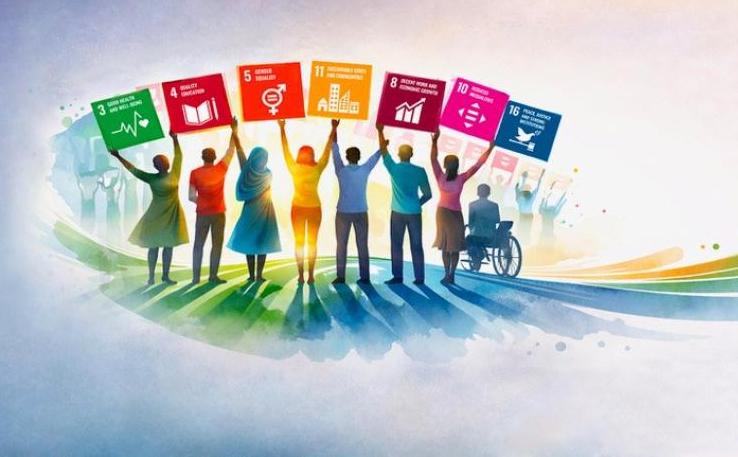
Photo: United Nations
ISLAMABAD: On World Autism Awareness Day, Pakistan reiterated its dedication to advancing the rights, education, and social inclusion of individuals with autism.
Under this year’s theme, “Autism and Humanity: Every Life Has Value,” Pakistan’s Prime Minister Shehbaz Sharif described autism as a neurodevelopmental difference that "can affect communication, language, and social interaction," according to a press release issued by the Prime Minister's Office.
“Individuals on the autism spectrum deserve understanding, acceptance, and equal opportunities to participate fully in society,” the PM said.
Providing appropriate care, education, and training to children with special needs remains one of the government’s top priorities, he said, with efforts underway to enhance their capabilities using available resources.
Part of those efforts includes a state-of-the-art Center of Excellence for Autism whose foundation stone was laid by the federal government in December 2025. The center is expected to be completed within the year, as per the PM's statement.
The PM stressed that supporting children with special abilities was a collective responsibility and paid tribute to parents, teachers, and caregivers for their dedication.
He said advanced facilities were urgently needed across the country so that persons with autism and other developmental challenges do not feel isolated.
In a message on the day, President Asif Ali Zardari said the government was working to strengthen support systems through early identification, inclusive education, rehabilitation services, and public awareness to reduce barriers faced by individuals with autism.
“Autism is not a limitation, it is a different way of experiencing the world,” the president said.
“Our responsibility is to ensure that individuals on the autism spectrum have access to the support, education and understanding they need to live with confidence.”
Numbers impacted
Citing global estimates, Zardari said one in every 100 children is on the autism spectrum, with signs appearing early in life and affecting communication, learning, and interaction.
In Pakistan, available estimates suggest about 0.5% of the population is affected, according to APP.
Given the country's population of nearly 250 million, this figure translates to well over a million individuals, many of them children.
A study by Lahore University of Management Sciences (LUMS) estimates that around two million children in Pakistan are affected by learning and developmental disabilities, including dyslexia and autism, with most diagnosed at a late stage.
How can the challenges be combated?
According to the WHO, evidence shows that early identification, inclusive education and nurturing care in families and communities can significantly improve health, well-being and participation.
President Zardari, in his statement, highlighted how challenging it can be for parents who "often have to travel long distances to find specialized care or adjust work schedules to attend therapy sessions."
In an effort to counter this, the president said the Pakistan Institute of Medical Sciences in Islamabad has set up a dedicated autism center offering diagnostic services, speech and language therapy, occupational therapy, behavioral support and guidance for parents. Such facilities are important in building a more coordinated approach to care.
Screening during routine child health visits, along with better training for doctors, teachers and community workers, can help ensure quicker referrals. Nutritional support during pregnancy, including folic acid supplementation, has also been shown to reduce risk. This allows children to receive help when it can make the greatest difference,” the president said.
"A society is measured by how it treats those who need support," he added.
"We must ensure that individuals with autism are able to live with dignity, take part in daily life and pursue their potential without unnecessary obstacles."
Globally, the WHO says one in every 127 people is diagnosed with autism. The health organization has placed autism among the top ten brain health conditions contributing to health loss worldwide.
Latest News
Islamic states condemn Israel over death penalty law
3 HOURS AGO
Pakistan-Egypt FMs reiterate support for peace initiatives
3 HOURS AGO
PM, president call for greater inclusion as Pakistan marks Autism Awareness Day
3 HOURS AGO
Myanmar parliament to elect new president Friday: Speaker
4 HOURS AGO
Pakistan says onus on Afghanistan to end hostilities
5 HOURS AGO