
Pakistan TV Digital releases documentary revisiting four nights of Pakistan-India conflict

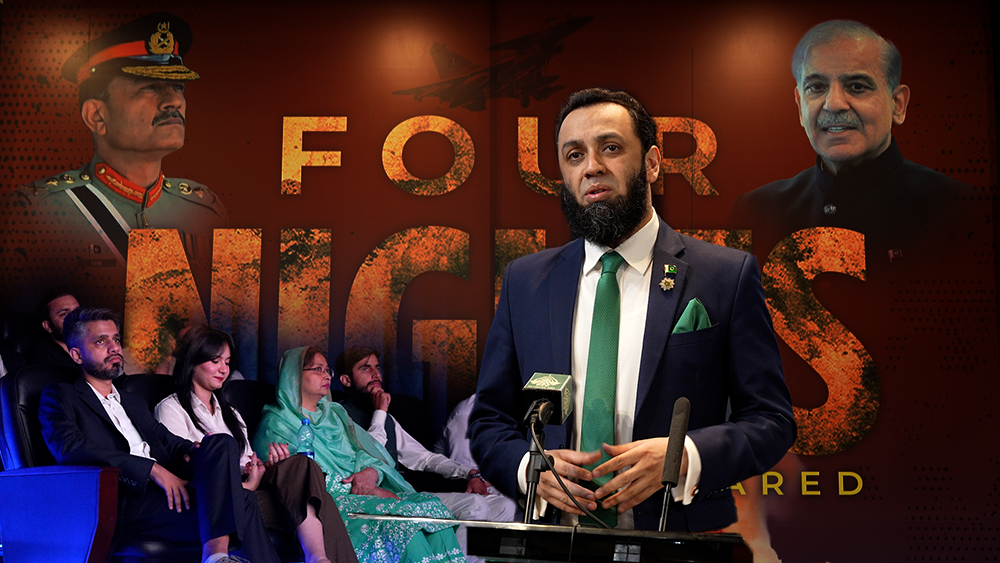
ISLAMABAD: Pakistan TV Digital, a project of Pakistan Television Network, on Sunday released Four Nights: When Pakistan Roared, a documentary chronicling untold stories, eyewitness accounts and behind-the-scenes moments from the four-day military confrontation between Pakistan and India in May 2025.
Released on the first anniversary of Marka-e-Haq, the documentary reconstructs the dramatic events that unfolded between May 6 and May 10 last year, when tensions between the two nuclear-armed neighbours escalated into one of the most serious military confrontations in recent years.
The film traces the chain of events from the April 22, 2025 attack in Pahalgam, in Indian Illegally Occupied Jammu and Kashmir, which left more than two dozen tourists dead and sharply escalated tensions, to India’s subsequent strikes inside Pakistan and Islamabad’s military response under Operation Bunyan Um Marsoos.
Blending frontline accounts, journalist testimonies, military analysis and archival footage, the documentary offers a detailed reconstruction of the conflict, capturing both its strategic dimensions and its human cost.
Featuring journalists, defense analysts, diplomats and eyewitnesses, the film revisits the fear, uncertainty and intensity of four nights that pushed South Asia to the brink of a wider conflict.
“I exactly remember that moment. I cannot forget that moment for the rest of my life,” senior television anchor Waseem Badami says in the documentary, recalling the first strikes and the shock that followed.
Journalist Meher Bokhari describes the emotional toll of the initial attacks.
“Innocent civilians being targeted. Children being hit. So, one was aghast,” she says.
The documentary captures how Pakistan’s media, military and civilian institutions responded in real time as the crisis unfolded, including round-the-clock news coverage and efforts to counter competing narratives.
Federal Information Minister Attaullah Tarar recalls the pressure of the moment.
“We were awake for almost 72 hours. We hadn’t slept and we were on the go trying to give our point of view and also to combat and counter false narratives,” Tarar says in the film.
Journalist Muneeb Farooq reflects on the uncertainty that dominated those early hours.
“You’re Pakistani at the end of the day. You feel alarmed, but there’s also anger inside you,” he says.
The documentary identifies the aerial battle as the turning point in the conflict, when Pakistan says it downed multiple Indian fighter aircraft, including Rafale jets, significantly shifting the strategic momentum.
Veteran journalist Talat Hussain recalls the military’s posture at the time.
“For one missile, there will be ten coming from our side,” Hussain says, recounting the message conveyed during military briefings.
Badami describes the moment confirmation came that Indian aircraft had been brought down.
“Goosebumps. Oh my God. And you cannot break it right now,” he recalls.
“And then that moment came when I was told: ‘Okay, break it. Tell the world that Pakistan has done it.’”
Beyond the battlefield, the documentary examines the parallel information war that unfolded during the conflict, highlighting competing narratives, media coverage and digital disinformation.
Former US ambassador to Pakistan Cameron Munter, who appears in the documentary, says Pakistan’s strategic communications during the crisis appeared more coherent.
“I was impressed, I’d have to say, that the PR element of the war, the Pakistanis did a much better job,” Munter says in an interview recorded from Prague.
The film also captures the national mood as reports emerged of Pakistan’s claimed aerial successes.
“The feeling itself was fantastic,” Tarar says. “It was beyond words.”
The documentary revisits the evolution of the conflict, from India’s initial strikes to drone incursions, missile exchanges and the eventual ceasefire that brought an end to four days of fighting.
It also examines how the confrontation reshaped regional perceptions of military capability, deterrence and strategic balance.
Defence analyst Ali Hamza describes the aerial engagement as a defining moment in modern warfare.
“It was a system fighting another system. It was one of the episodes of modern air combat,” he says.
Beyond strategy and statecraft, the documentary highlights the human cost of war, including civilian casualties, displacement and fear among border communities.
A civilian witness from Azad Jammu and Kashmir recalls the moment explosions shook homes in the dead of night.
“The whole house shook. Everyone was scared. Then we took the kids and left,” the witness says.
Speaking at the documentary’s launch at PTV Headquarters in Islamabad, Pakistan TV Digital Editor-in-Chief Saqib Tanveer said the project aimed to preserve firsthand accounts of a conflict that left a lasting mark on the region.
“The documentary aims to provide a historical record of the crisis through the voices of those who witnessed it firsthand,” Tanveer said.
“From newsrooms and diplomatic circles to affected communities and strategic observers, these voices help document history as it was lived.”
The release coincides with nationwide commemorations marking the first anniversary of Marka-e-Haq, with official ceremonies held across Pakistan and at diplomatic missions abroad to honour the armed forces and those who lost their lives during the conflict.
For viewers, Four Nights: When Pakistan Roared offers both a reconstruction of a critical moment in South Asia’s recent history and a deeply personal account of how war is experienced, reported and remembered.
The documentary premiered on Pakistan TV Digital’s official digital platforms at 4pm on May 10.
Latest News
Pakistani PM, Qatar counterpart discuss regional situation, peace efforts
AN HOUR AGO
Indian film star sworn in as head of industrial hub Tamil Nadu
2 HOURS AGO
.jpg)
Pakistan TV Digital releases documentary revisiting four nights of Pakistan-India conflict
2 HOURS AGO
Saudi Aramco says net profit up more than 25% in first quarter
3 HOURS AGO

Hantavirus-hit cruise ship arrives in Spain’s Canary Islands
4 HOURS AGO