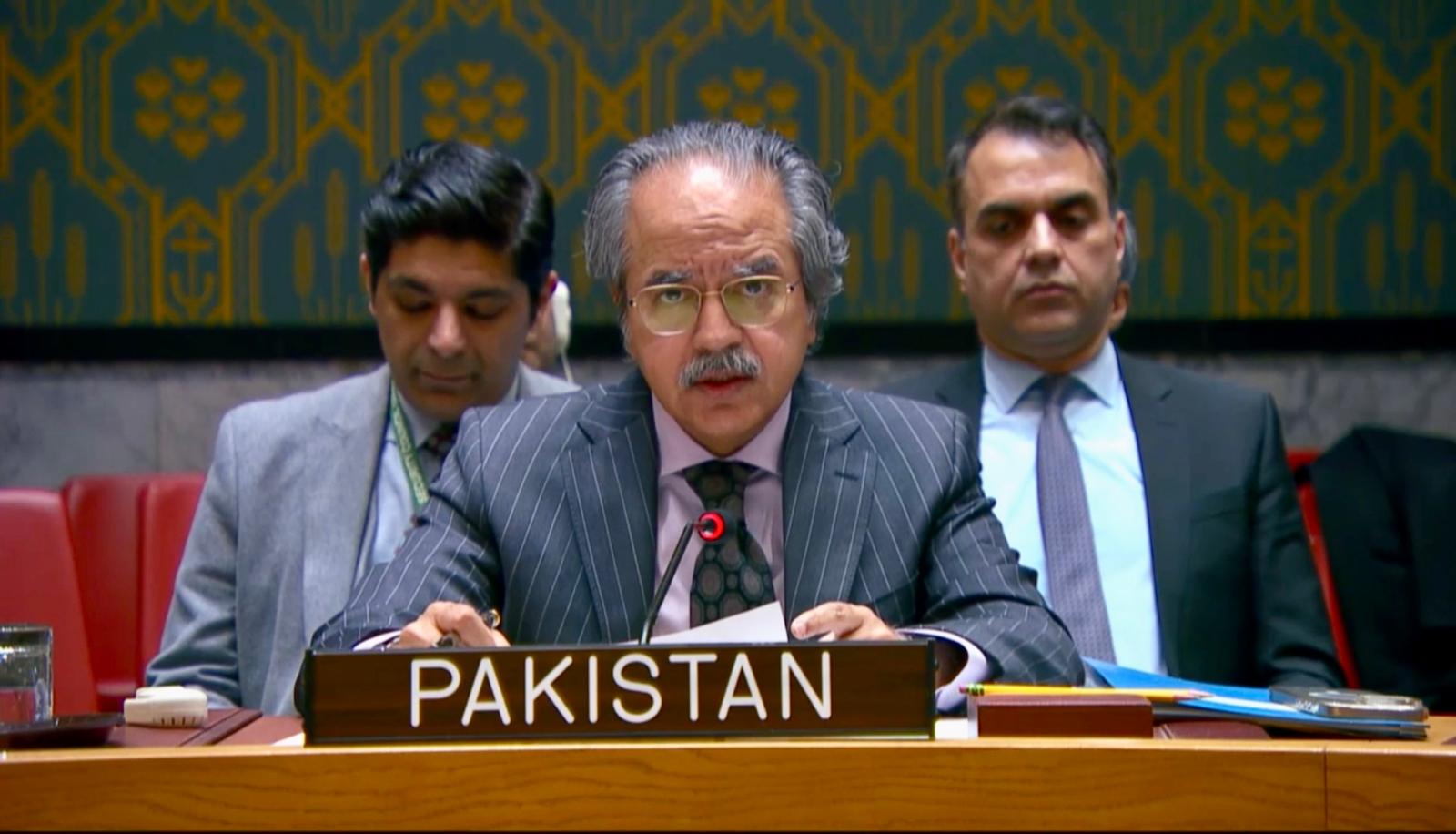
ISLAMABAD: Pakistan on Thursday expressed serious concern at the UN over the presence of militant groups operating from Afghan territory, saying they were responsible for deadly attacks inside Pakistan.
Pakistan’s Permanent Representative to the United Nations, Asim Iftikhar Ahmad, told the council that Afghan soil was being used by groups including the Tehreek-e-Taliban Pakistan (TTP), the Balochistan Liberation Army (BLA), the Majeed Brigade, Islamic State Khorasan (IS-K), and Al-Qaeda to plan and orchestrate attacks.
“These groups have been responsible for some of the most heinous terrorist attacks against Pakistan and incidents of hostage-taking,” Ahmad said.
He said recent attacks claimed by the BLA and Islamic State had resulted in the deaths of 80 Pakistanis, describing them as “dastardly and cowardly.”
Pakistan voted in favor of a UN resolution extending the mandate of the monitoring team overseeing sanctions against the Taliban for another 12 months, Ahmad said, welcoming the unanimous adoption of the measure and praising US efforts to build consensus.
Ahmad reiterated Islamabad’s call for Afghan territory not to be used for attacks against neighboring countries and urged efforts to prevent external actors from exploiting the situation.
He said the resolution sent a clear message to Afghanistan’s Taliban authorities that their territory should not be used to threaten other countries and that Afghan groups or individuals should not support militants operating abroad.
The resolution also urged member states to prevent kidnappers and militant groups from benefiting from ransom payments or political concessions and to ensure the safe release of hostages, he added.
Ahmad called on the Taliban to honor their counter-terrorism commitments and take sustained and verifiable action against militant groups.
He also pointed to broader challenges facing Afghanistan, including a humanitarian crisis, deteriorating human rights conditions, particularly for women and girls, economic difficulties, natural disasters, political exclusion, and drug trafficking.
Ahmad said the UN monitoring team played an important role in providing the council with insights on Afghanistan’s security landscape and expressed hope it would continue to support the sanctions committee’s work.
“It is for the Taliban to decide what path they wish to choose for Afghanistan, whether isolation or peace and prosperity as a responsible member of the international community,” he said.


.jpg)
.jpg)
.jpg)