ISLAMABAD: A fresh Hindu-Muslim controversy has emerged in the Indian state of Madhya Pradesh after Muslim residents in Dhar District alleged that Friday congregational prayers were effectively denied at the historic Bhojshala-Kamal Maula complex, despite a Supreme Court order allowing namaz at the site.
The dispute revolves around whether genuine Friday prayers were permitted or whether the district administration staged a symbolic and limited prayer to claim compliance with the court’s directions, Indian media reported on Saturday.
Allegations of denial and detention
Resident Imran Khan said Muslims were prevented from entering the disputed complex despite prior assurances from authorities.
In a video message, Khan claimed that he and others were taken under police escort on Thursday night and informed they would be allowed to offer Friday prayers between 1pm and 3pm, the time window specified by the Supreme Court.
“We were kept under constant watch. When the prayer time was about to end, we were told to go back home. Later, the administration said namaz had taken place — but that was not us,” he alleged.
Residents further claimed that Deputy Collector Roshni Patidar and DSP Anand Tiwari detained several people at the Kamal Maula Mosque for nearly 16 hours, effectively preventing them from reaching the Bhojshala complex.
‘Dummy namaz’ controversy
Tensions escalated after videos circulated on social media showing a small group of around 15 to 17 men offering prayers in a rear portion of the mosque complex.
Local Muslims questioned the authenticity of the gathering, saying the individuals were not known worshippers and did not represent the local community.
Another video showed people wearing yellow volunteer jackets entering the mosque premises, raising further questions about whether the administration arranged a symbolic prayer to demonstrate compliance with the Supreme Court order.
Posting on X, Team Rising Falcon (@TheRFTeam) alleged that despite clear court directions, namaz was not allowed in practice and that a “dummy prayer” was conducted by unidentified individuals. Another account, @TheMuslim786, reported protests by Muslim women, who said Friday prayers were denied at the site.
Residents also questioned how a Friday congregation, traditionally attended by large numbers, could be reduced to just 15-17 worshippers.
Administration’s response
According to an NDTV report, the district administration rejected the allegations. Dhar Collector Priyank Mishra said prayers were held with community consent and dismissed claims of wrongdoing.
“With the consent of the community, 15-17 Muslim men offered namaz at the designated location inside the complex between 1pm and 3pm, in line with the Supreme Court’s order,” Mishra said.
A senior police officer, quoted by Indian media, also claimed that worshippers were escorted in a protected vehicle and allowed to pray without interruption.
Claims of unequal implementation
Muslim residents argue that while namaz was reduced to a symbolic act, Hindu rituals were allowed in full scale.
They pointed out that Basant Panchami celebrations and Hindu rituals at the Bhojshala complex reportedly continued with hundreds of participants, raising concerns of selective implementation of the court’s ruling.
The Supreme Court had earlier ruled that both Hindu rituals and Muslim prayers could continue side by side at the site until a final decision is reached.
Hindu group’s stance
A right-wing Hindu group has defended the administration’s actions.
The Hindu Network Foundation (@hindufund_) said Basant Panchami puja and yajna were conducted under Supreme Court's directions.
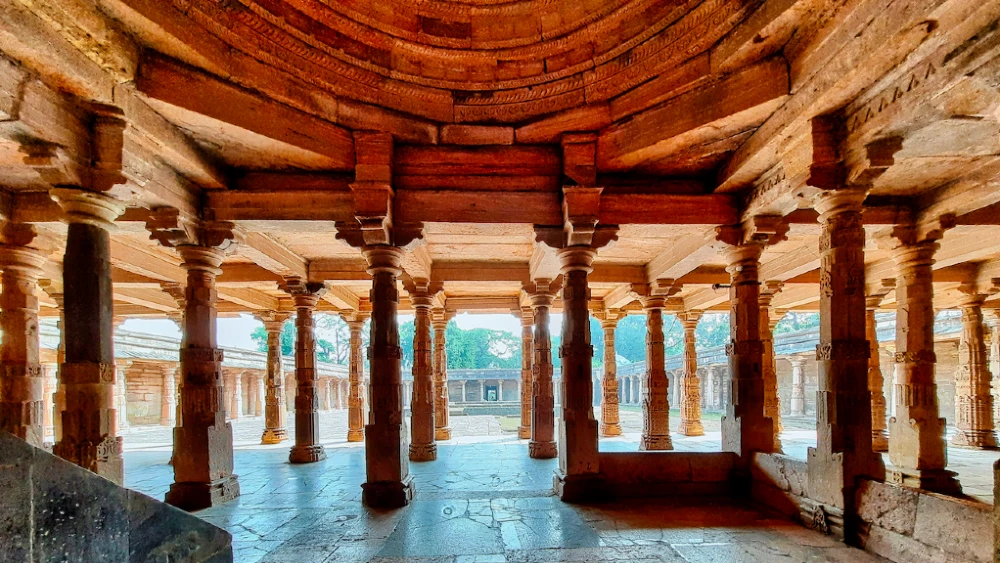
The group claimed that Bhojshala was originally built by Raja Bhoj of the Parmar dynasty as a temple dedicated to Saraswati, a Hindu goddess, and was later converted into a mosque, arguing that its architectural features reflect Hindu origins.
“Why should a centuries-old mandir be reduced to permission-based worship?” the group said, calling on Hindus to “lawfully reclaim” the site.



.jpg)