AUSTRIA: The decision to transform the house where Adolf Hitler was born into a police station has stirred mixed emotions in his Austrian hometown, reopening long-standing debates over how the country confronts its Nazi past.
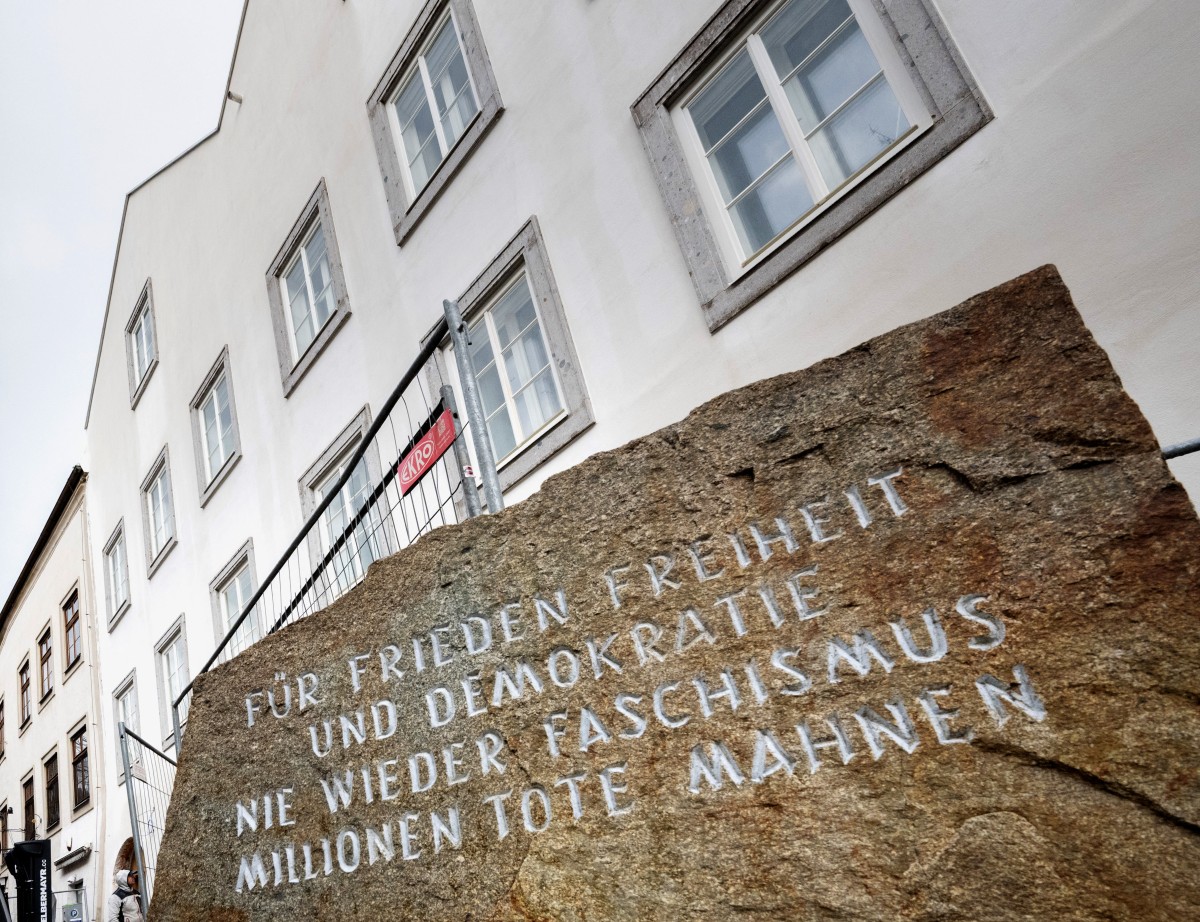
In the quiet border town of Braunau am Inn, workers this week put the finishing touches on the renovated facade of the 19th-century building where Hitler was born on April 20, 1889.
“It’s a double-edged sword,” said Sibylle Treiblmaier, 53, standing outside the pale yellow house on a narrow street lined with shops. While the move could deter far-right extremists from gathering at the site, she said it might have “been used better or differently.”
The Austrian government passed a law in 2016 to expropriate the dilapidated property from its private owner, saying it aimed to “neutralise” a location that had long attracted neo-Nazi sympathizers. Interior ministry officials say police officers are scheduled to move into the building in the second quarter of 2026.
A memorial stone in front of the house reads: “For Peace, Freedom and Democracy. Never Again Fascism. Millions of Dead Warn.”
Austria annexed by Nazi Germany in 1938 has repeatedly faced criticism for failing to fully acknowledge its responsibility in the Holocaust.
An estimated 65,000 Austrian Jews were murdered and 130,000 forced into exile during Nazi rule.
The issue has taken on renewed political resonance. The far-right Freedom Party of Austria, founded by former Nazis, won the most votes in the 2024 national election but failed to form a government.
In Braunau last year, two streets previously commemorating Nazis were renamed after years of complaints by activists.
For some, turning the house into a police station sends the wrong message.
“A police station is problematic,” said Austrian author Ludwig Laher, a member of the Mauthausen Committee Austria, which represents Holocaust survivors and their families. Police, he argued, are obliged “in every political system” to protect the state, making the symbolism complex.
Laher said an earlier proposal to convert the building into a center for dialogue and peace-building had received broad public support.
Jasmin Stadler, a 34-year-old shop owner and Braunau native, said she would have preferred a project placing Hitler’s birth in a clearer historical context.
She also criticized the renovation’s reported 20-million-euro ($24 million) price tag.
Others welcome the redesign. Wolfgang Leithner, a 57-year-old electrical engineer, said the new use would “hopefully bring a bit of calm,” preventing the site from becoming a shrine for extremists.
“It makes sense to use the building and give it to the police, to the public authorities,” he said.
The mayor’s office declined to comment.
As Austria continues to grapple with how to memorialize its role in Nazi crimes, the future of the Braunau building underscores the delicate balance between remembrance, responsibility and the desire to prevent history from being misused.