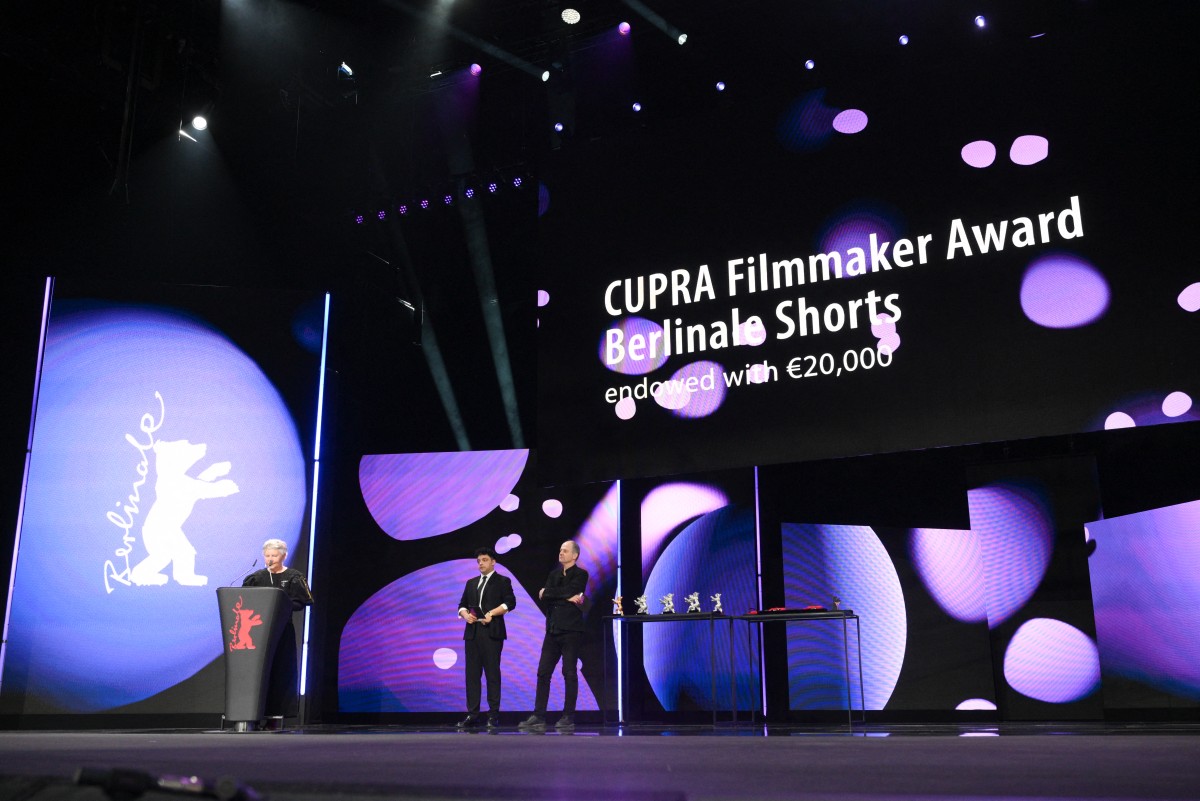
BERLIN: The artificial intelligence revolution sweeping through the entertainment sector was at first glance not evident at this year's Berlin Film Festival, but the potential for widespread changes was still on people's minds.
The festival has had the air of an arthouse bubble when it comes to the topic of AI and the event's leadership is keeping above the fray.
"At present, we do not intend to issue any statements regarding the use of AI in the film industry," the festival said in a statement sent to AFP, adding: "We are monitoring developments with great interest."
Nevertheless, some of the filmmakers present addressed the question of how the technology is changing the industry.
Yoshitoshi Shinomiya, director of the only animated feature in competition, "A New Dawn," told reporters he had briefly considered using AI in his film.
"During production, we weren't entirely sure we would be able to complete the film. At one point we wondered whether we should use AI for the backgrounds," he said.
But Shinomiya concluded that AI is not yet "well-developed enough" to do that sort of work.
Juliette Prissard from Euro cinema, an organization representing French film and TV producers, said it's only a matter of time until the tools improve.
"It's reasonable to think that in one, two or three years... you won't be able to tell the difference anymore," she told AFP.
AI can already "write scripts" and replaces extras in crowd scenes or even generate "digital replicas" of someone.
No choice
In France, where foreign-language films are frequently shown with dubbing, voice actors have already been raising the alarm about AI's impact on their profession.
But Prissard warns other film industry jobs could be replaced in the "near" future, such as "technicians, the set designers" and even "the producers themselves".
Sevara Irgacheva, secretary general of the European Film Agency Directors' association (EFAD), said that already "junior jobs are disappearing: all the assistant editors, assistant screenwriters".
Despite this, the industry "is leaning toward accepting" AI "because, in any case, we have no choice".
The tools have the potential to help the sector become more efficient and "save time at every stage of production", particularly in the more "bureaucratic" aspects of the process.
A survey carried out in early 2025 by France's National Centre for Cinema (CNC) found that 90 percent of film and audiovisual professionals surveyed were already using AI tools in their work.
In Berlin, Austrian director Georg Tiller presented a short film mixing filmed footage and AI-generated images, saying it was an attempt to encourage his fellow filmmakers to fight for a place in the new "digital cinema".
"If we don't then I fear that that we will die a slow death, because it will just steamroll over us," Tiller told AFP.
The 'temptation' of deregulation
The issue garnered some relief with a December agreement between OpenAI and Disney, which allowed the use of the entertainment giant's characters on Sora, the AI-generated video platform.
In return, Disney now has "privileged access" to OpenAI's "highly sophisticated" tools, giving it a "technological advantage over the rest of the sector", said Prissard.
But the use of AI in cinema has prompted thorny legal questions over intellectual property and the very notion of authorship, at a time when legislation is only just beginning to grapple with the subject.
Under EU rules, streaming platforms such as Netflix and Amazon Prime must carry at least 30 percent of European content in their catalogues.
Prissard questioned how those enforcing the rules "will be able to tell the difference ”Between original creations and "synthetic" ones.
Given "the fear of falling behind" the United States and China in developing AI technologies, Prissard said that Europe may succumb to the "temptation to allow more leeway to innovate without obstacles".