ISLAMABAD: The Afghan Taliban carried out widespread corporal punishments and public executions over the past year, intensifying concerns about human rights and due process under their rule, according to media reports and United Nations findings.
At least 1,186 people were flogged and six publicly executed between March 2025 and early 2026, according to figures reported by Amu TV.
“Official figures indicate that nearly 100 women were flogged over an eight-month period, many of the punishments carried out in public,” the outlet reported.
Statements from Taliban courts suggest that the use of corporal punishment increased in the latter part of the year, with women among those subjected to public floggings.
The developments come as the United Nations has repeatedly warned of a worsening human rights situation in Afghanistan. In its latest monitoring updates, the UN Assistance Mission in Afghanistan (UNAMA) documented the continued use of corporal punishment and restrictions on basic freedoms, noting that such practices raise serious concerns about compliance with international human rights standards.
UN findings further highlight the disproportionate impact on women, describing Afghanistan as “the world’s most severe women’s rights crisis,” where women face systemic barriers to justice and are significantly less likely than men to access legal protections.
Public executions have also resumed as a form of punishment.
Over the past year, executions were reported in Khost, Badghis, Farah and Nimroz provinces, with at least three people executed in Badghis alone.
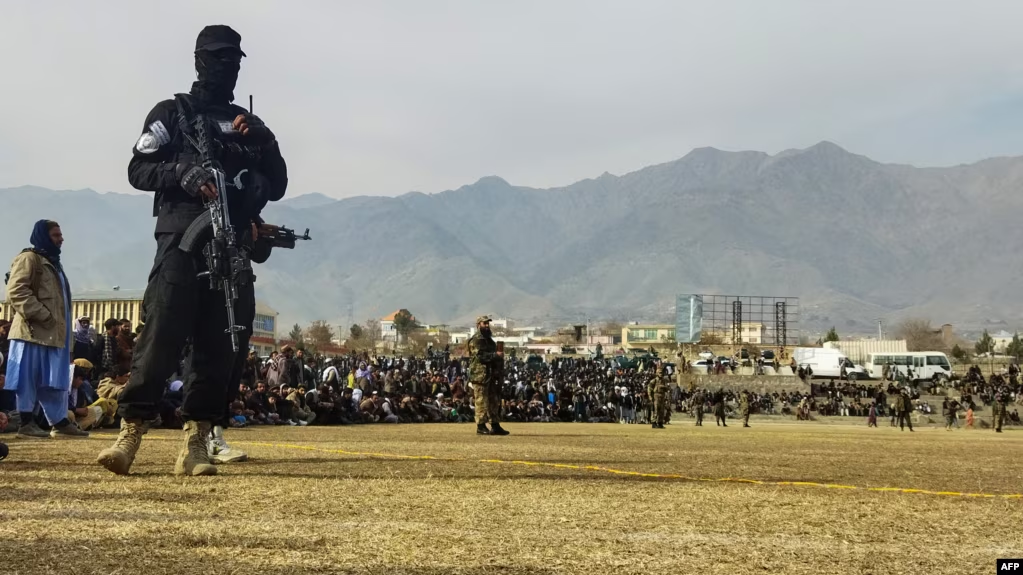
In one recent case, a man was executed in a sports stadium in eastern Afghanistan’s Khost province in front of thousands of spectators, including children, underscoring concerns over the public nature of such punishments.
Human rights monitors say these actions reflect a broader pattern.
UNAMA reports throughout 2025 documented extrajudicial punishments, arbitrary detentions and shrinking civic space, alongside a justice system lacking due process safeguards.
Cases involving freedom of expression have also drawn attention.
In Kapisa province, a man was sentenced to 39 lashes and one year and six months in prison for what Taliban authorities described as “propaganda against the system,” according to Amu TV.
In another instance, an individual was flogged and jailed for allegedly insulting Taliban leader Hibatullah Akhundzada, highlighting increasing restrictions on speech.
Abdul Ahad Farzam, a human rights researcher, warned that the continuation of such practices could have lasting consequences.
“These punishments violate basic human rights standards and create a climate of fear in society,” he said.
Rights advocates say the expansion of corporal punishment reflects a broader rollback of fundamental freedoms since the Taliban’s return to power in 2021.
UN reporting consistently points to systematic restrictions on civil liberties, women’s rights and access to justice, alongside the use of punitive measures that fall short of international legal standards.
Human rights groups and international observers warn that the persistence of such practices is deepening Afghanistan’s isolation and further eroding protections for its population.