ISLAMABAD: US Treasury Secretary Scott Bessent on Sunday criticized the European Union’s new Free Trade Agreement (FTA) with India, accusing European governments of undermining their own security interests by continuing to buy refined petroleum products derived from Russian oil.
Speaking in recent media interviews, Bessent argued that the deal exposes what he described as a contradiction in Europe’s stance on the war in Ukraine, while placing the United States at an economic disadvantage.
‘Financing the war against themselves’
In an interview with ABC News on Sunday, Bessent defended the Trump administration's decision to impose heavy tariffs on Indian imports, attributing them directly to New Delhi's continued purchases of Russian oil.
During the segment, Bessent underlined that the US has "sacrificed" more than its allies to press Russia, specifically by imposing trade sanctions on India.
“We have put 25 per cent tariffs on India for buying Russian oil,” Bessent said.
“Guess what happened last week? The Europeans signed a trade deal with India. Russian oil goes into India, the refined products come out, and Europeans buy them. They are financing the war against themselves.”
The treasury secretary highlighted the dramatic shift in India's energy imports since February 2022. Russian crude, which accounted for just 2-3% of India's oil imports before the war, surged to 18-19% afterward, allowing Indian refiners to profit from heavily discounted Russian barrels while exporting refined fuels to European markets.
Bessent explicitly used the comparison to illustrate what he called the "laundering" of Russian oil.
‘Virtue signaling’
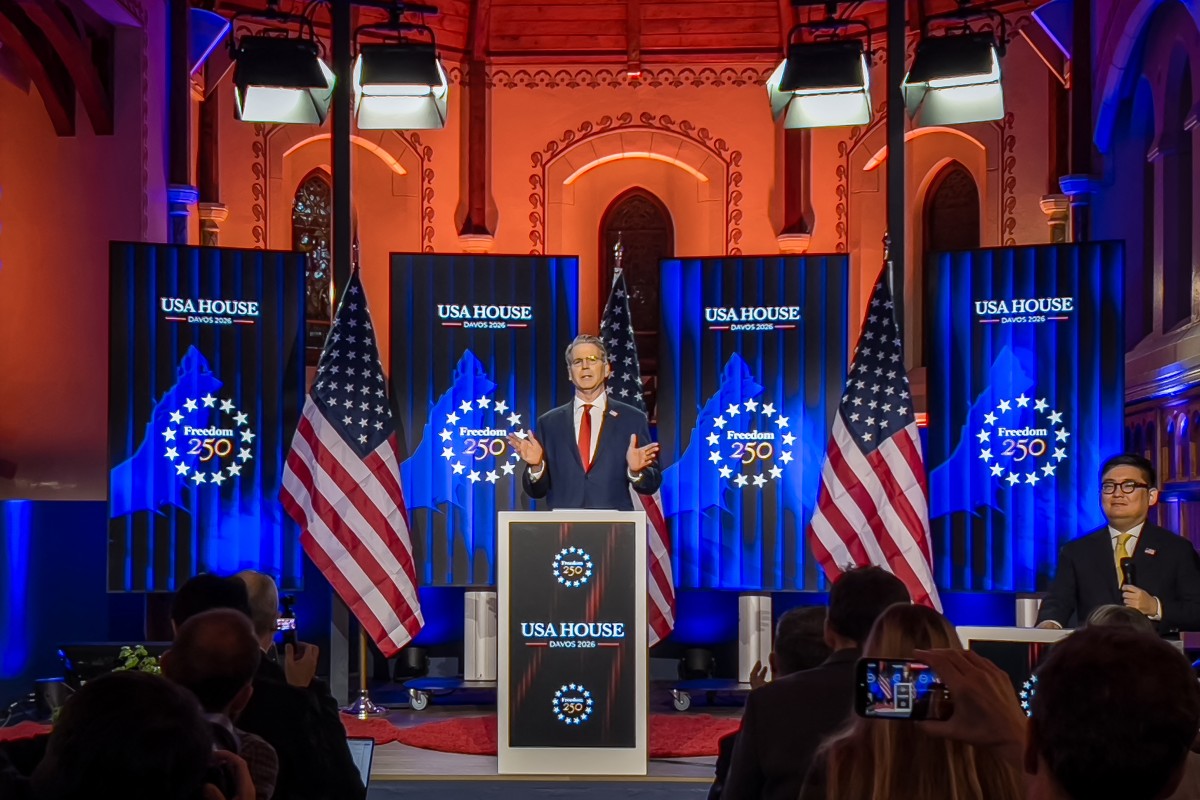
Speaking separately at the World Economic Forum in Davos, Bessent accused European allies of “virtue signalling” on Ukraine while avoiding tougher trade measures that could disrupt their commercial ties with India.
He characterized this as selective enforcement of sanctions.
"Our European allies refused to impose tariffs because they wanted to protect this big trade deal with India," he told Politico, implying that the outcome led Washington to increase sanctions, while Europe continued to benefit from global energy trade imbalances.
The Trump administration has imposed tariffs of up to 50% on Indian goods, with a 25% levy explicitly targeting Russian oil shipments.
However, Bessent hinted that relief could be on the way.
“There is a path to remove them [25% tariffs],” he said, signaling room for negotiation if India shifts its energy sourcing away from Moscow, adding that Indian purchases of Russian oil have "collapsed" due to US pressure.
Deal runs counter to US interests
US officials, including US Trade Representative (USTR) Jamieson Greer and Bessent, say several provisions of the India-EU agreement run counter to American economic and strategic interests.
The agreement is expected to grant Indian textiles, chemicals, leather goods, and other labor-intensive products preferential access to European markets, directly competing with US exporters who face average EU tariffs of around 10% in these sectors.
The Alliance for American Manufacturing, a non-profit group, expressed concerns that although EU tariffs are already low, eased regulatory and compliance requirements could give Indian drugmakers an advantage over US pharmaceutical companies in Europe.
More broadly, European Commission President Ursula von der Leyen’s comments portraying the deal as part of supply-chain diversification have sparked worries in Washington. Bessant has pointed out that closer EU-India relations could reduce Europe’s economic reliance not just on China but also on the United States.
Bessent’s comments came days before an India-EU summit at which New Delhi and Brussels announced they had concluded negotiations on a comprehensive free trade agreement after nearly two decades of talks.
President Ursula von der Leyen described the pact as creating a combined market of around two billion people, accounting for roughly a quarter of global GDP.


.jpg)
.jpg)