ISLAMABAD: Political parties must clearly outline how they plan to protect the environment in their election manifestos, Bangladesh’s Environment, Forest and Climate Change Adviser Syeda Rizwana Hasan said on Saturday, according to state-run Bangladesh Sangbad Sangstha.
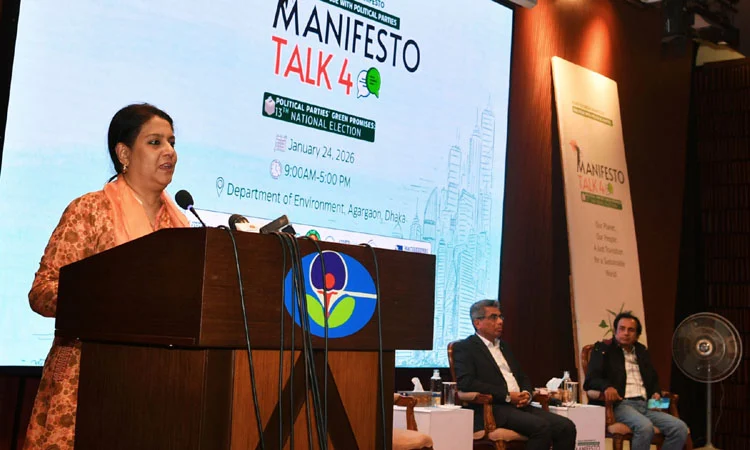
Speaking at a dialogue titled "Road to Green Manifesto: Dialogue with Political Parties" in Dhaka, Rizwana said parties should present a clear roadmap along with implementation plans to address environmental challenges and pollution.
She also urged young people to hold future elected governments accountable for their environmental commitments to ensure effective action against pollution, BSS reported.
The event was organized by the non-profit organization Brighters at the Department of Environment in Agargaon, Dhaka.
Rizwana said the interim government had already initiated steps to resolve environmental problems and emphasized that the next elected government must continue and strengthen those efforts.
She highlighted air pollution as a major concern, noting that around 13% of the country's pollution comes from brick kilns. Road dust, uncovered construction materials and the burning of waste were also identified as key contributors, she said.
“A policy has been made to stop black smoke from vehicles. Now it needs to be implemented. We have declared Savar as a ‘degraded airshed.’ We have faced many legal obstacles while conducting a campaign to close brick kilns,” she said.
The adviser noted that Dhaka had fewer peak air pollution days this year than the previous year. She added that the Executive Committee of the National Economic and Development Authority had approved a project to increase the capacity of the Eastern Refinery as part of efforts to curb air pollution, BSS reported.
Rizwana also said the Noise Pollution Regulations 2025 have been prepared, alongside separate rules aimed at conserving forests and protecting wildlife.
Addressing young participants, she said sustained and systematic efforts were essential to achieving long-term environmental protection. “We should not lose hope; the works should be carried forward systematically,” she said.