Pakistan-hosted UN event highlights education, financial inclusion as key to women’s empowerment

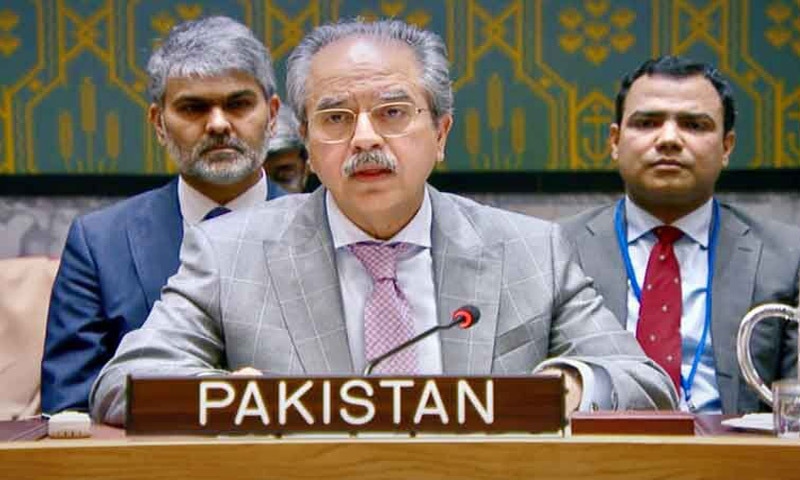
Speaker Asim Iftikhar at Pakistan-sponsored event call for prioritizing financial inclusion & education to drive women's empowerment. (Photo: APP)
ISLAMABAD: Speakers at a Pakistan-hosted side event on the margins of the 70th session of the United Nations Commission on the Status of Women (CSW) emphasized that education and financial inclusion are essential to advancing women’s empowerment and sustainable development, said a press release shared on X by Pakistan's Permanent Mission to the UN on Saturday.
The event, titled “Empowerment of Women in Pakistan: The Role of Education and Microfinance in Advancing Justice and Equality,” was organized by the Permanent Mission of Pakistan to the United Nations in collaboration with the Muslim American Leadership Alliance (MALA), a US-based non-profit organization.
The discussion brought together diplomats, academics, civil society representatives, and policymakers to examine how education and economic opportunity can strengthen women’s rights and participation in society.
Participants stressed that empowering women through education is not only a social development goal but also a strategic investment in the future of societies.
Countries that educate girls tend to experience stronger economic growth, greater resilience, and more inclusive development.
Empowerment through education
Senator Bushra Anjum Butt, chairperson of the Senate Standing Committee on Federal Education and Professional Training, said women’s empowerment through education remains both a constitutional commitment and a national development priority for Pakistan.
She highlighted that Article 25-A of the Constitution guarantees free and compulsory education for every child.
She noted that federal and provincial governments have taken steps to expand access to education by building schools in underserved areas, improving school infrastructure, and increasing scholarships.
Programs such as the Punjab Educational Endowment Fund and Waseela-e-Taleem under the Benazir Income Support Programme, she said, provide conditional cash transfers to encourage families to keep girls in school.
Senator Butt also highlighted efforts to align education with employment opportunities, noting that institutions such as the National Vocational and Technical Training Commission are integrating vocational, technical, and digital skills into education systems to improve women’s employability.
She added that Pakistan’s growing microfinance ecosystem and initiatives like the Kamyab Jawan Program are enabling women to access credit and establish small businesses.
At the same time, she acknowledged that extremist groups, including Tehreek-e-Taliban Pakistan (TTP), have targeted schools and educational infrastructure in some areas, affecting opportunities for girls.
Girls’ access to education
Despite these challenges, she said Pakistan remains committed to policies that expand girls’ access to education and promote women’s economic participation.
In his opening remarks, Pakistan’s Permanent Representative to the United Nations, Ambassador Asim Iftikhar Ahmad, noted that millions of girls around the world continue to face barriers to education due to poverty, discrimination, displacement, and conflict.
He said these challenges are often intensified in conflict situations, where instability and insecurity disrupt schooling and limit opportunities for girls. Ambassador Asim pointed to the Occupied Palestinian Territories and Indian Illegally Occupied Jammu and Kashmir as examples where conflict and restrictions have significantly affected access to education.
“For many young girls, the simple act of going to school, something that should symbolize hope and opportunity, has often been overshadowed by insecurity and uncertainty about the future,” he said.
The ambassador emphasized that linking education with economic opportunities is essential to transform learning into empowerment.
Technical and vocational training initiatives, digital skills programs, and university-based innovation and incubation centers, he said, are helping prepare young women to participate in an increasingly technology-driven global economy.
Pathway out of poverty
Maha Khan, chairperson of MALA, highlighted the long-term impact of girls’ education, noting that educating one girl can uplift entire families and communities.
She stressed that education becomes truly transformative when it leads to meaningful economic empowerment and when governments, institutions, and communities work together to support it.
Dr Beverley Barrett of Lumen Veritas LLC underscored the importance of a comprehensive approach to women’s empowerment that combines education, governance, technology, and cultural change.
While acknowledging progress in Pakistan’s education enrollment and women’s labor force participation, she noted that significant gaps remain and sustained political commitment will be necessary to address them.
Afreen Mushtaq, a Fulbright scholar from Pakistan, shared her personal journey from Orangi Town in Karachi to higher education at the Institute of Business Administration Karachi and Harvard Business School.
She described education as a pathway out of poverty, particularly for girls from underserved communities, and said educating one girl can create a ripple effect across families and communities.
The discussion was moderated by Saima Saleem, counsellor at Pakistan’s Mission to the United Nations.
The event concluded with an interactive question-and-answer session in which students engaged panelists on challenges, opportunities, and the way forward for advancing women’s empowerment.
Latest News
Tell me why you're a mosquito magnet
35 MINUTES AGO

Iran state media says two more footballers pull Australia asylum bids
3 HOURS AGO
Petrol stocks at comfortable levels as Pakistan reviews energy preparedness amid Gulf war
4 HOURS AGO
UN chief says 'diplomatic avenues' available to stop war in Lebanon
4 HOURS AGO
Pakistan rejects Afghan Taliban claims about capturing posts as ‘false’
8 HOURS AGO