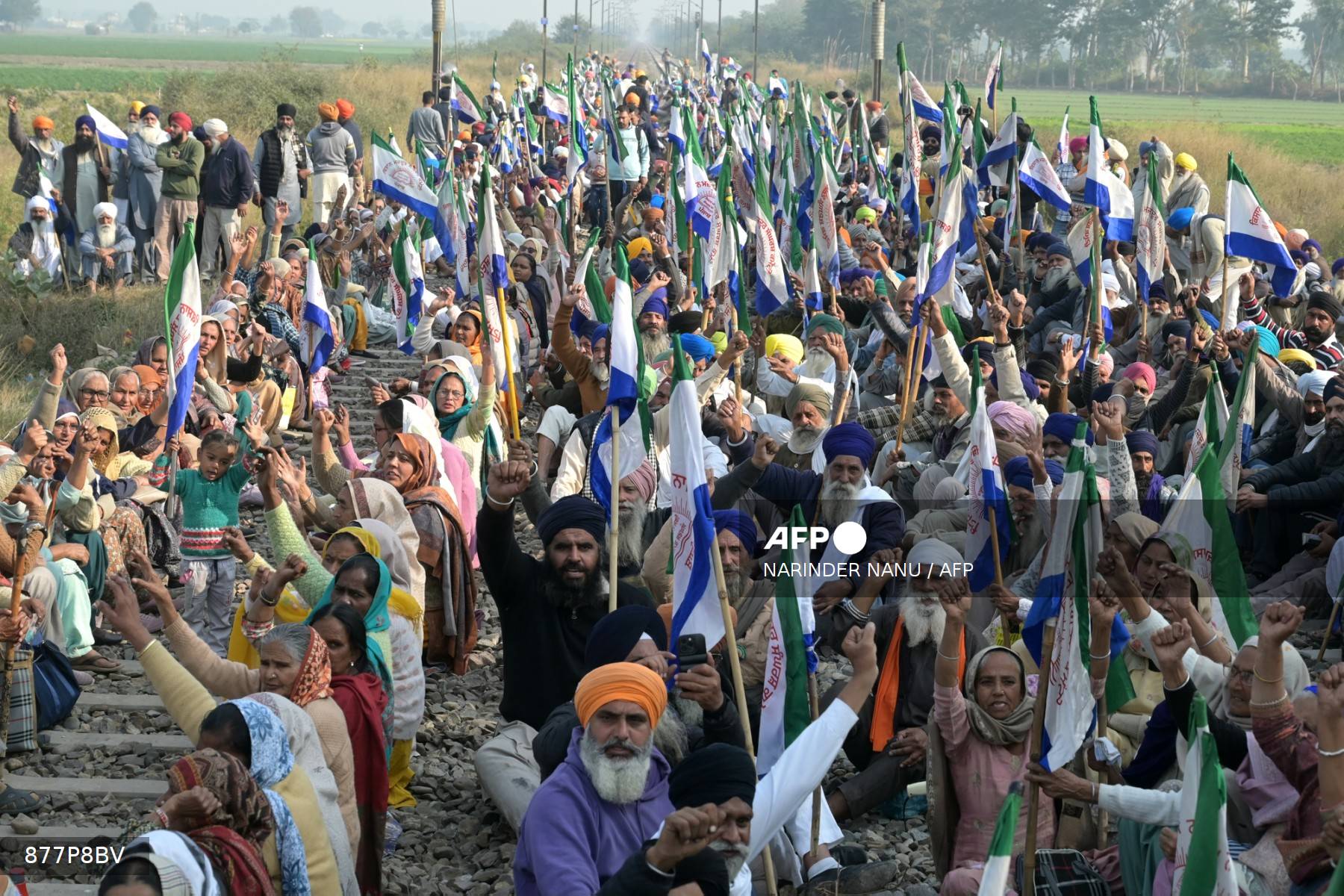
ISLAMABAD: On Jan 16, farmers came out on the streets in massive numbers all across India, answering the call for the “all india resistance day”, in protest of recent legislations by BJP favouring corporations and infringing farmers’ rights.
The protests are against new laws such as the VB-GRAMG Act, Seeds Bill, and Labour Codes which will further negatively impact farmers' livelihoods, undermine federalism, and erode worker rights, following the earlier repeal of farm laws, according to SKM and All India Kisan Sabha (AIKS).
Thousands of farmers, workers, and progressives staged demonstrations in their villages, towns, and workplaces throughout the country against the Indian government’s recent policy announcements.
Farmers demanding repeal of the aforementioned bills took to the streets in Punjab, Haryana, Delhi, Uttarakhand, Uttar Pradesh, Bihar, Telangana, Gujarat, Rajasthan, Kerala, Tripura, West Bengal.
All India Kisan Sabha (AIKS), organized a state-level ‘mahapanchayat’ (great council) in Haryana, which rejected prepaid “smart meters” and reiterated opposition to electricity/seed/labour changes.
In the Jind (Haryana) mahapanchayat, leaders announced a ‘chakka jam’ (road-block) on 12 February 2026, as a farmer–worker joint protest “in support of workers’ rights”, alongside opposition to the Centre’s policy package.
The Kisan Sabha vice-president, Inderjit Singh, said farmers had resolved to oppose the Centre’s bills, and the “abolition/replacement of MGNREGA”, calling these and related measures “pro-corporate”policies of the Modi-led NDA and the BJP state government.
He added that the wide-scale participation in the gathering showed that the people were furious over these reforms and were rejecting them outright.
Astonishingly, not a single winter has passed since 2019, without the farmers protesting for their rights on a wide scale.
Shoya Yoshida, General Secretary of the International Trade Union Confederation - Asia Pacific (ITUC-AP), said:
“In countries where regressive laws that equally affect workers and other sectors were introduced, trade unions are able to successfully mobilise not only a strong constituency among workers but also a strong support from other sectors. Such is the case in India when workers, along with farmers, have organised a series of nationwide protests against the government’s anti-worker and anti-farmer policies.”
The BJP central government, however, is yet to bat an an eye to problem.






.jpg)