ISLAMABAD: A newly declassified email from the Jeffrey Epstein files has triggered controversy in India, alleging that Prime Minister Narendra Modi sought to ingratiate himself with the United States president during a 2017 overseas visit, a claim seized upon by India’s opposition as deeply damaging and warranting public explanation.
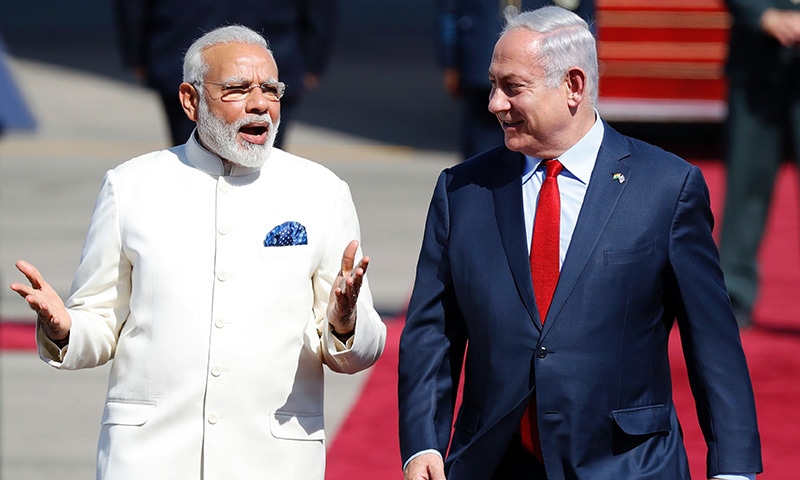
The email, released as part of the latest tranche of Epstein-related documents declassified by the US Department of Justice on Friday, claims that the Indian prime minister “danced and sang” in Israel for the benefit of the US president following a meeting weeks earlier.
“The Indian Prime Minister Modi took advice and danced and sang in Israel for the benefit of the US President. They had met a few weeks ago. IT WORKED,” the email states.
India’s main opposition party, the Congress, reacted sharply, alleging that the disclosure points to a “deep and long-standing” association between Modi and Epstein, a convicted sex offender whose international connections continue to draw scrutiny.
“Now it is clear that Prime Minister Modi has a very deep and long-standing connection with Jeffrey Epstein, which is shameful for India,” the Congress said in a post on its official X account.
The party noted that Modi undertook an official visit to Israel from July 4 to 6, 2017 and that the email was dated just three days later. It further pointed out that the Indian prime minister had met Trump in Washington shortly before that visit, on June 25–26.
“Connecting the dots in Jeffrey Epstein’s emails reveals that Modi went to America in June 2017 and took advice from Epstein there,” the Congress claimed, demanding clarity from the prime minister on the nature of any contact.
The opposition also questioned the Modi government’s silence, arguing that the allegations, regardless of their source, raise serious concerns about transparency, accountability, and the conduct of India’s highest office.
India’s Foreign Office dismissed the claims, rejecting the substance of the email while acknowledging the timing of the prime minister’s official travel.
“Beyond the fact of the Prime Minister’s official visit to Israel in July 2017, the rest of the allusions in the email are little more than trashy ruminations by a convicted criminal and deserve to be dismissed with the utmost contempt,” the ministry said in a statement.
Despite the denial, the episode has intensified political pressure on Modi, with critics arguing that the government’s reflexive dismissal fails to address legitimate questions raised by the declassified material and further fuels doubts over India’s international conduct and credibility.