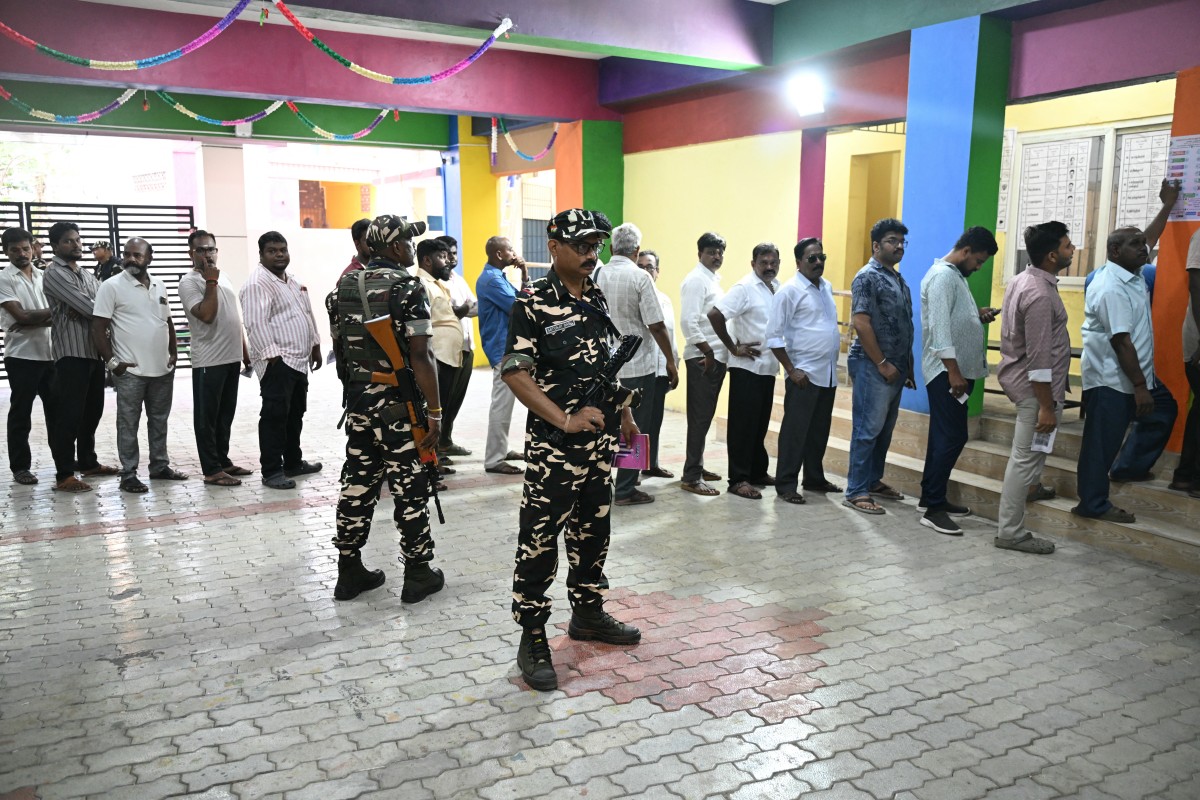
ISLAMABAD: Voting began on Thursday in two of India’s most politically important opposition-held states, West Bengal and Tamil Nadu.
But Bengal’s first phase was overshadowed by claims that voter-roll deletions disproportionately hit Muslims and other marginalized groups, according to AP.
In West Bengal, polling opened for 152 of the state’s 294 assembly seats, while Tamil Nadu voted in a single phase for all 234 seats.
Results in both states are due on May 4.
BJP targets opposition strongholds
Prime Minister Narendra Modi’s BJP is trying to break into both opposition strongholds.
In West Bengal, it is seeking to unseat Chief Minister Mamata Banerjee’s Trinamool Congress, which won 213 seats in the 2021 election.
In Tamil Nadu, the BJP remains a junior ally of the strongest regional party, AIADMK and has historically struggled to make significant gains.
Voter roll purge under scrutiny
In Bengal, however, the most serious issue hanging over the vote is not just campaign rhetoric, but who has been allowed to vote at all.
About 9 million names were removed from West Bengal’s electoral roll during the Special Intensive Revision, roughly 12% of the electorate.
The Election Commission has said the exercise was meant to remove duplicate, deceased or otherwise ineligible voters, according to AP and other reports.
Critics, however, say it has instead become a blunt instrument of disenfranchisement.
Murshidabad fallout deepens alarm
The Wire reported from Murshidabad that the fallout extends far beyond the ballot box.
Migrant laborers whose names were deleted are now trapped in what the report described as a no-man’s land.
Some workers said employers were demanding proof that they had voted in order to show they were not “Bangladeshi.”
In border districts and Muslim-majority belts, the stigma attached to deletion has turned an administrative exercise into a threat to livelihood, dignity and belonging.
The pattern has raised wider alarm because the exclusions appear to fall disproportionately on vulnerable communities.
A data analysis by The Wire said Muslim-heavy constituencies, especially in the border belt, were disproportionately pushed into harsher scrutiny channels.
AP also reported that opposition leaders accused the BJP of using the purge to suppress minority and dissenting votes.
Security was tightened across Bengal, including at “supersensitive” polling stations and along the Bangladesh border.
But the central question surrounding this election is not only whether voting will be peaceful. It is whether an election can be called fully democratic when millions arrived on polling day, already erased from the rolls.


.jpg)