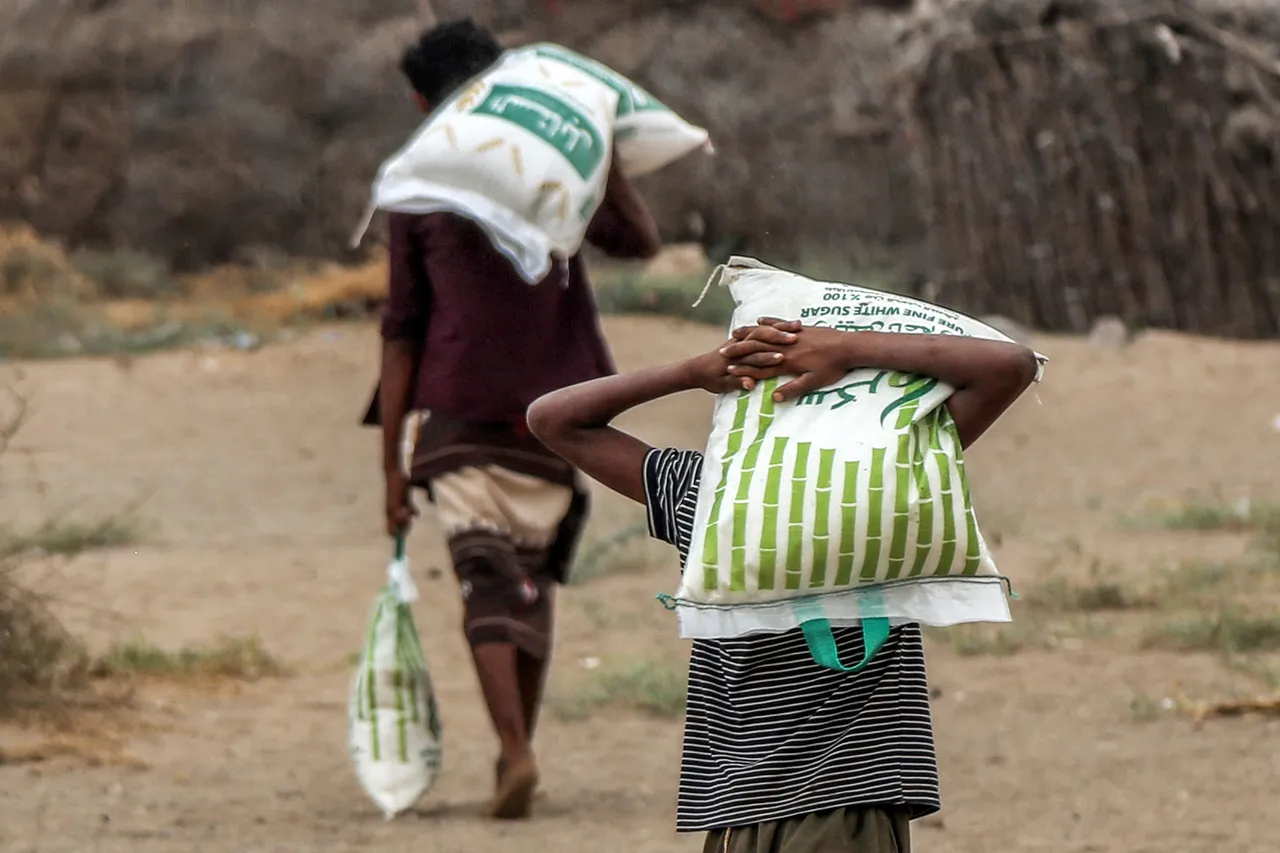
ISLAMABAD: Over half of Yemen's population is sliding toward life-threatening hunger in what aid agencies are calling the country's most dangerous food security phase in years, with famine-like conditions expected in multiple districts by early 2026.
The dire warning comes from the International Rescue Committee's (IRC) latest policy briefing published in January 2026, which reveals that 18 million people are expected to experience worsening levels of food insecurity by early 2026, with an additional one million people facing life-threatening hunger.
According to the IRC report titled "Starving in Silence: Surging Food Insecurity in Yemen," the crisis is being driven not by conflict escalation, but by a collapse of household purchasing power and a sharp decrease in humanitarian assistance in 2025. By the end of 2025, the humanitarian response was less than 25% funded, with the Nutrition Cluster at less than 10% and the Food Security and Agriculture Cluster at 15%, effectively paralyzing lifesaving services.
Unprecedented service collapse
The IRC's assessment reveals devastating impacts on the ground. Following major donor funding withdrawals in early 2025, nutrition service reach declined by 63% within one year in IRC-supported districts in southern Yemen.
Health facilities and therapeutic feeding centers closed, mobile teams were overstretched, and admissions for severe acute malnutrition fell—not because children were healthier, but because fewer who were sick could access services.
Nearly 80% of households assessed by IRC reported severe hunger, and half of households with children under five reported at least one malnourished child.
Worst outlook since 2022
The latest IPC (Integrated Food Security Phase Classification) projections for September 2025–February 2026 show Yemen now carries the highest burden of IPC Phase 4 globally. Pockets of famine affecting over 40,000 people are expected in four districts within the next two months—the worst outlook for the country since 2022.
IRC assessments conducted in Taiz, Al Dhale'e, Abyan and Al Hodeidah in August 2025 revealed that half of all households with children under five had at least one malnourished child during the previous three months, while 1 in 4 households had at least one malnourished pregnant or breastfeeding woman. Nearly 97% of respondents cited food security as their number one need.
Crisis drivers
The IRC report identifies four key factors driving the crisis:
1. Funding collapse: The current contraction is historic in scale, with less than 25% of the Humanitarian Needs and Response Plan funded as of December 2025—the lowest levels of funding in a decade. Critical nutrition and food security pipelines have been heavily disrupted, removing the last safety net for millions.
2. Economic shock: Currency depreciation, inflation, reduced remittances, and banking disruptions have sharply eroded purchasing power in a country that imports most of its food. Even households that briefly stabilized after the 2022 truce are now resorting to crisis-level coping strategies such as skipping meals and selling productive assets.
3. Climate change: Flooding in August 2025 affected nearly half a million people, destroying homes, farmland, water systems and health facilities across 20 governorates. Yemen ranks as the world's third most climate-vulnerable country, with temperatures set to rise by up to 3.3°C in the next 40 years.
4. Fragmented governance: The ongoing conflict has eroded state capacities to enforce laws regulating land, water and natural resource management. Yemen receives 80 to 90% less climate finance than the average for countries with the lowest climate vulnerability despite high needs.
Surveillance systems collapsing
The IRC warns that food security and nutrition surveillance systems are collapsing, masking the true scale of hunger. As data gaps widen, needs go undocumented, assistance is not triggered, and preventable deaths risk going unseen.
In 20 districts across 7 governorates where IRC had to withdraw or severely shrink nutrition programming due to funding cuts, levels of food insecurity have climbed on average by over 7%, with over 148,000 people moving into crisis or worse levels of food insecurity in 2025 alone.
Window for action closing
"People still remember when they didn't know where their next meal would come from. The fear is that we are returning to this dark chapter again," said Caroline Sekyewa, IRC Yemen Country Director.
The IRC states that without immediate donor action to restore and scale integrated food security and nutrition assistance, famine-like conditions are expected in multiple districts by early 2026.
However, the report states that timely funding in the next three to six months can still prevent mass loss of life, protect recent humanitarian gains, and stabilize the most at-risk communities.
The IRC is calling on donors to restore and scale integrated food security and nutrition funding, fully fund lifesaving nutrition treatment, and re-establish joint food security and nutrition surveillance systems. The organization has also urged Yemeni authorities to facilitate safe, principled, and unhindered humanitarian access and support economic relief efforts.


.jpg)

.jpg)